Masonry with clay tiles
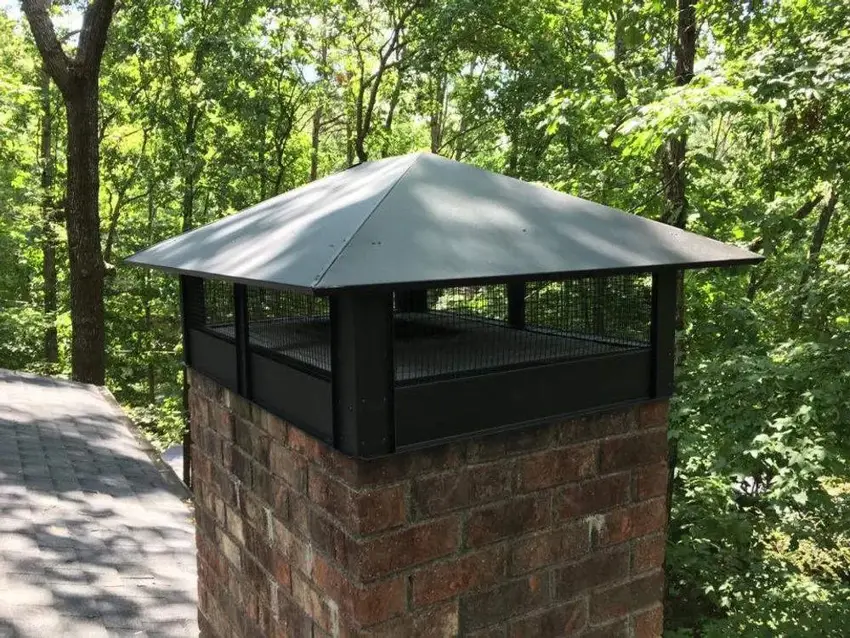
A single-flue stainless cap clamped or anchored to the tile, sized from the outside dimensions of that tile.
Chimney caps for Charleston homes, in and out of the historic districts
Chimney Pro Cleaners measures, supplies and installs chimney caps for houses across the City of Charleston, from a single clay flue to a wide multi-flue masonry top. Call 864-727-7460 or send the form with your address, and tell us whether you know the house is inside a Board of Architectural Review district so that question can be settled with the city before a cap style is chosen.
Call 864-727-7460Free Phone Consultation with a Certified Technician
The address comes first here. The City of Charleston covers land in both Charleston County and Berkeley County, and some streets fall inside historic districts reviewed by the Board of Architectural Review while many do not. Those two facts shape the cap more than the ZIP code does.
After that, a phone photo from the sidewalk helps: how many flue openings you see, whether the top is brick, stucco or a framed chase, and whether an old cap is missing, leaning or stained with rust.
864-727-7460 ↗Historic districts
Often, yes. Inside BAR jurisdiction the chimney itself is treated as part of the building's character, so a cap that alters its profile deserves a conversation with city preservation staff first.
The City's City of Charleston BAR General Guidelines (2024) state plainly that chimneys are a character-defining feature of a house and should be retained. The Board has existed since 1931, and its later North of the Line materials policy lists chimneys beside porches, columns and windows as visible features whose loss would compromise a building's character.
Neither document mentions caps by name, so this page does not say a cap is automatically approved or refused. City staff review goes more smoothly with documented details: the cap's dimensions, finish color, height above the flue tile, how it attaches, and whether it can come off later without cutting brick. Those facts let staff judge the change against the guidelines.
Roof access
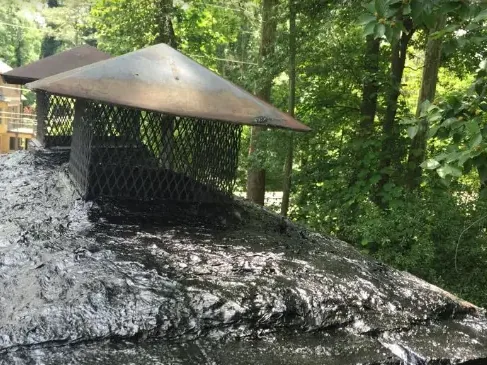
The City of Charleston BAR Policy Statement for Historic Roofing names slate, standing-seam metal, wood shingle and tile as significant roofing in the districts. Those are materials the city wants preserved, which makes the route across the roof part of the planning, not an afterthought.
Before a visit, roof photos from the ground help a qualified crew judge the roofing type, pitch and height and plan safe access that avoids damage to historic material. If the roof cannot be crossed safely, other access options get discussed rather than forcing it. Homeowners should not climb these roofs to measure a flue; a clear photo from the ground is enough to start.
Newer streets
Plenty of Charleston addresses sit outside any review district. There the cap question turns practical: how wet the flue gets, what the crown looks like, and what kind of chimney you actually have.
A single-flue stainless cap clamped or anchored to the tile, sized from the outside dimensions of that tile.
An outside-mount cap that covers every tile at once, provided the crown is sound enough to carry its anchors.
The termination is part of a listed factory-built system, so the replacement follows the manufacturer's listing, not a generic mesh cap.
Our chimney cap installation guide guide walks through each of those types in more depth if you want to read before calling.
Wind and rain
A properly fastened cap reduces how much rain falls straight down the flue. It does not make a chimney storm-proof. The state climate summary from NOAA NCEI / NCICS South Carolina State Climate Summary 2025 counts 168 tropical cyclones or their remnants affecting South Carolina between 1900 and 2024, so wind exposure is a fair part of the conversation.
What a cap is attached to matters as much as the cap. Anchoring into sound tile or masonry, rather than crumbling mortar, and choosing a hood with overhang suited to the flue are the points to discuss. If the crown under the cap is cracked, water will still find its way in, and a cap is not a cure for that.
Our visit
You confirm the county and whether the property is inside a BAR district, and check with city staff where it is, before anything is ordered.
Flue tile sizes, flue count and crown condition decide between a single-flue and outside-mount cap.
Any flue that vents a gas appliance or a factory-built fireplace gets a cap listed for that appliance. A working flue is never sealed shut.
The cap is fastened to sound material and clearances above the flue are checked.
Salt air
Near tidal water, plain galvanized steel tends to rust sooner than stainless, and rust streaks show on light stucco. Stainless steel is the usual working choice, with copper discussed where appearance matters. Powder-coated stainless can give a darker color that sits quietly on old brick.
Cost and access
Quotes follow measurement, and this page lists no fixed prices. The main factors are the cap material (stainless, powder-coated stainless or copper), how many flues need covering, whether a single-flue or outside-mount design fits, and whether the crown or top tile needs repair before a cap can be anchored.
Access is the other big variable in Charleston. A slate, tile or standing-seam roof inside a historic district can take more planning and setup time than a modern shingle roof, and a tall chimney may need a lift. Time spent getting staff input on a district property is part of the schedule too. If the visit turns up wider masonry problems, our South Carolina chimney services hub page explains the repair work handled across the state.
Caps, covers and access
Discuss your chimney top before scheduling.
Call 864-727-7460 ↗
Check with city preservation staff before any work. The BAR guidelines call chimneys character-defining, but they do not name caps, so staff are the right people to say whether your specific cap needs review. Ask us whether written product details can be arranged for that office.
Usually it can come close. A low-profile cap in black or dark bronze that clamps to the flue tile changes the silhouette very little and can be removed later without cutting brick. Very tall or brightly polished caps are the ones that stand out from the street.
It depends on the crown and on what each flue serves. Separate caps work when the tiles stand at different heights, while one outside-mount cap suits tiles that are close together on a sound crown. A flue venting a gas appliance may need its own listed cap regardless.
The City of Charleston itself sits in both Charleston County and Berkeley County, so the county depends on your address. City rules, including BAR review where it applies, follow the city limits. Your tax bill or the county parcel record confirms which county applies before a cap is ordered.
No. A cap keeps rain out of the flue opening and keeps animals and debris out of the flue. Leaks through cracked crowns, worn flashing or porous brick need their own repair, and those are worth checking at the same visit.
Part of our South Carolina service network
Nearby, see chimney cap installation in Daniel Island SC, chimney cap installation in Mount Pleasant SC, chimney cap installation in James Island SC, chimney cap installation in Hanahan SC and chimney cap installation in North Charleston SC.
For a property elsewhere in South Carolina, start with our South Carolina chimney repair hub, or read the company's general chimney cap installation guide. Those company guides may show a Georgia number; use 864-727-7460 for your Charleston inquiry. This page does not represent a staffed Charleston office.
References: City of Charleston BAR General Guidelines (2024) · City of Charleston BAR Policy Statement for Historic Roofing · City of Charleston BAR North of the Line Historic Materials Policy · NOAA NCEI / NCICS South Carolina State Climate Summary 2025
Have your property address ready
Stay connected
Meet the brand. Follow the conversation.